05 Aug, 2026
Say goodbye to range anxiety and the daily hassle of hunting for public charging stations. Waking up to a fully charged battery is the ultimate perk of driving an electric vehicle, and installing a dedicated EV charger for home is the key to making that a reality. Rather than relying on slow, standard wall outlets or waiting in line at public hubs, a residential charging station transforms your garage into a personal, high-speed power source—ensuring your car is always ready for the road ahead.
If you're looking for complete independence, battery safety, and uninterrupted travel, then acquiring the right portable charging cable from a reliable source like the store plugy is crucial. In this guide, we put everything you need to know to make a smart and informed purchasing decision.
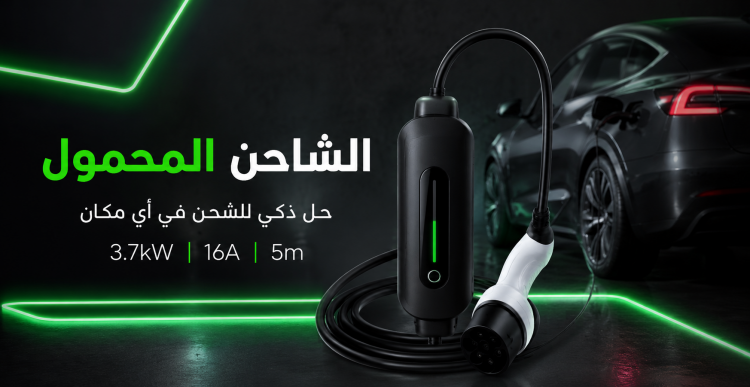
It is a smart charging cable with an integrated control box that allows you to connect your electric vehicle to any standard or industrial wall outlet to power the battery, often serving as a flexible alternative to a hardwired Ev charger for home. This device acts as an intermediary, protecting both the vehicle and the electrical grid, and regulating the AC current flow to ensure a completely safe and stable charging process.
In the world of electric vehicles, the Type 2 plug, also known as the Mennekes plug, is the most common European and global standard. But why is owning a portable charging unit with this standard essential for travelers, even if they already own an Ev charger for home?
To ensure maximum efficiency and protection, site experts recommend plugy. Do not purchase any product before verifying the following technical specifications:

The speed depends on the maximum supported amperage:
Because you will often be using it in open spaces, make sure to:
Standard length ranges between 5 to 7 meters. Shorter distances may put you in a difficult position, and too long may be heavy and difficult to store.
Many users confuse portable charging units with fixed wall-mounted charging stations. This table outlines the key differences to help you choose the most suitable option Wallbox charger :
|
Comparison point |
Portable EVSE (Electrical Vehicle Charging Unit) |
Fixed Ev charger for home (Wallbox) |
|
Basic use |
Travel, emergencies, and moving between multiple locations. |
Daily domestic use in a fixed garage. |
|
Installation |
No installation required (Plug & Play), ready to go immediately. |
Requires a specialized technician to connect it to the main electrical panel. |
|
Charging speed |
Medium to fast (up to 7.4 kW or 22 kW). |
Very fast and stable (easily reaches 11 or 22 kW). |
|
Total cost |
Economical (no additional installation cost). |
High (device price + wiring costs). |
|
Flexibility |
Very high (it travels with you in the trunk). |
Non-existent (fixed to the wall and cannot be moved). |
Portable charger prices for cars vary noticeably based on integrated technologies, often making them a more affordable choice compared to installing a permanent Ev charger for home. Quality should never be compromised for a lower price, as inferior products can damage your car battery.

To ensure the portable charger you have purchased works efficiently for many years without malfunctions or the need to replace it, follow these simple practices:
Don't leave your mobility to chance or the availability of public power stations. The ideal solution starts with choosing certified and reliable equipment that matches your vehicle's power and protects its battery. Whether you need a portable unit or an Ev charger for home, discover the best selection and competitive prices now on our platform. plugy specializes in electric vehicle solutions. Visit us at plugy to equip your car with the smart technology your engine deserves, and enjoy complete peace of mind on all roads.
Yes, most smart devices are equipped with an auto-cutoff feature. Once the battery reaches 100%, the current flow stops to prevent overcharging, thus preserving the lifespan of the cells.
Absolutely, if it has an IP65 rating or higher. These ratings mean the controller and cable are water-resistant. However, it's still advisable not to fully submerge the unit in water for complete safety.
Daily reliance on alternating current (AC) via a mobile cable or an Ev charger for home is the healthiest option for extending the lifespan of a lithium-ion battery. It is preferable to limit the use of direct current (DC) to extended periods of travel only to minimize thermal degradation.
The use of standard household extension cords with vehicle electrical equipment is strictly prohibited. These cords are not designed to withstand continuous high loads for several hours, and their use may cause the cord to melt or start a fire. Connect directly to a wall socket.