29 Jul, 2026
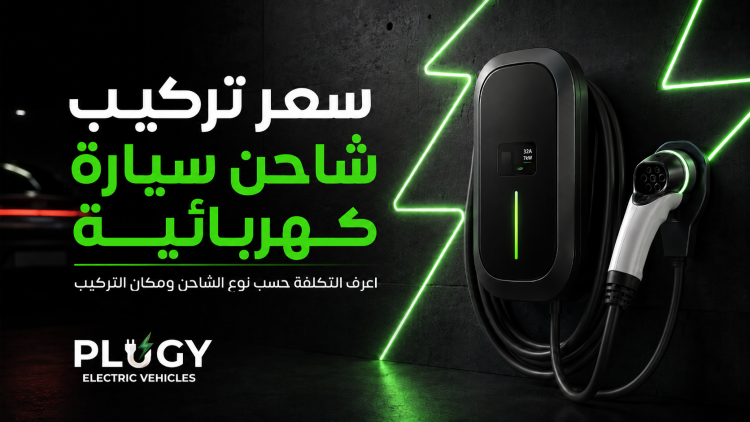
The average range Price of installing ev charger at home At home, the choice lies between the economical cost of basic equipment and the high cost of complex engineering installations, based on the charging unit's capacity, the distance between the electrical panel and the alignment point, and the type of electrical breakers required.
If you are looking for a secure foundation and accurate financial valuation with no hidden costs, we at [Company Name]Plugy EVWe offer a complete solution for equipping your garage, thanks to our specialized engineering team. In this guide, we provide a detailed and straightforward analysis of all cost aspects to ensure you choose a safe charger that extends your car battery's lifespan within your budget.
To accurately calculate the total price of installing ev charger at home, it's essential to recognize that the overall investment extends beyond just purchasing the charging unit (Wallbox). The final budget must account for electrical infrastructure updates, certified materials, specialized labor, and safety grounding systems.
|
Basic Cost Item |
Engineering Details & Specifications |
Estimated Percentage of Total Cost |
|
Charging Device (Basic Unit) |
The price varies based on power output (7kW - 11kW - 22kW), brand reputation, and smart connectivity features. |
45% - 60% |
|
Certified Electrical Cables |
High-quality copper cables (diameters ranging from 6 mm to 10 mm or more, priced per linear meter). |
15% - 25% |
|
Protection Panels & Breakers |
Dedicated DC protection circuit breakers (RCD Type B) and thermal-magnetic isolation switches (MCB). |
10% - 15% |
|
Civil & Construction Works |
Excavation work, laying insulating PVC conduit pipes, and restoring flooring or wall finishes. |
5% - 10% |
|
Labor & Programming Fees |
Professional engineer/technician fees for load testing, mounting, system configuration, and safety testing. |
10% - 15% |
The process of establishing a byd home charger is not simply a matter of installing a regular electrical appliance; it's a small-scale project that varies entirely from one house to another. There are several engineering and spatial constraints that directly determine the final Price of installing ev charger at home.
Distance is the most important variable in calculating the total cost. Every additional meter between the main power source (panel) and the connection point requires longer and thicker copper cables to prevent voltage drop and overheating of the wires, as well as increased labor costs for digging and laying.

Electric cars draw a very high current continuously for several hours. The electrical panels in older homes may not be able to handle this continuous load, necessitating the addition of independent protection circuits or a complete upgrade of the main panel, and the establishment of a separate earthing system to protect the car from fluctuations.
Choosing a charger with a touchscreen, an online (Wi-Fi) control app, the ability to schedule charging during off-peak hours, or a Dynamic Load Balancing feature that automatically reduces charging power when heavy household appliances are in use; all these additional features enhance the experience.Price of installing ev charger at homeThe final comparison with simple, traditional chargers.
Mounting the charger on a pre-existing concrete wall is the least expensive option. However, if your parking space is in an open area, you may need to pour a concrete base and purchase a custom metal pedestal to mount the charger, which will increase the overall cost.
When you decide to buy a home electricity charger or an electric car charging cable, don't let price be the only criterion. Protecting your investment in your expensive electric car, and safeguarding your home from fire hazards, requires strict adherence to the following standards:
Many new owners are torn between relying onCharging electric cars at homeCompletely, or using public networks. AlthoughPrice of installing ev charger at homeIt may seem like a high initial investment, but the following comprehensive comparison illustrates the fundamental difference in the long run:
|
Comparison point |
Home charging (AC) |
Public charging stations (fast DC) |
|
Operating cost (per kilowatt) |
Very economical (calculated within the normal household consumption brackets). |
High (includes service fees, maintenance, and the operating company's profit). |
|
Charging speed |
Slow to moderate (4-8 hours to reach 100%). |
Very fast (reaches 80% in just 30 to 45 minutes). |
|
Convenience and time saving |
Maximum convenience; charge your car while you sleep without wasting time. |
Driving to the station requires waiting on-site, and sometimes waiting in queues. |
|
Battery lifespan |
Slow charging reduces cell heat, which significantly extends the lifespan of lithium batteries. |
Continued reliance on fast charging accelerates cell deterioration over time. |
And consideringElectric car charging prices in EgyptIn commercial stations at the moment, we find that investing in a home charging point fully pays for itself (ROI) within the first or second year of use at most, thanks to the huge savings on consumption bills.
If you live in a rented house, or don't have a fixed, designated space for your garage, then acquiringPortable electric car charger(Portable EV Charger) is considered an ideal and practical solution.

Skip the complexities of electrical calculations, cable selection, and searching for specialized technicians. If you're looking for the best Price of installing ev charger at home With a guarantee of superior quality, we are on the platformPlugy(via our official website)plugyev.comWe offer you the complete solution.
We provide you with an accurate engineering estimate for your home, and supply the best European and international smart chargers, with a professional installation service from certified engineers to ensure the highest local and international safety standards.
Don't risk the safety of your car or home... Contact Plugy experts today for a free quote tailored to your needs!
Charging an electric car at home is significantly cheaper than filling up with conventional (gasoline) fuel for the same distance. The increase in your bill will be noticeable, but it remains the most economical option, especially if you purchase a smart charger that allows you to schedule charging for times when your household consumption is low, thus avoiding exceeding your battery limit.
This is one of the biggest mistakes that threatens lives and property. Installing car chargers requires precise engineering calculations for wire diameters based on distance and voltage, as well as knowledge of different types of DC circuit breakers. Relying on an unqualified technician to save a little money could lead to a fire in the main circuit board or damage to the on-board charger inside the car.
Electric vehicle charging stations in EgyptElectric vehicles are experiencing significant and excellent growth for highway travel or emergency charging. However, relying on them 100% means wasting time and incurring higher costs per kilowatt-hour, in addition to putting undue strain on the battery due to frequent use of DC fast charging. A home charger is essential for electric vehicles.
If it is planned correctly with a specialized company such asPlugyThe actual installation takes an average of 3 to 6 working hours, depending on the amount of civil work required (such as digging a cable path in the garage floor) and the complexity of connecting the cables to the main electrical panel.